Introduction
Every living organism—whether it’s a tiny bacterium or a massive elephant—is made up of cells. The cell is often called the “building block of life,” and for good reason. It is the smallest unit that can perform all the functions necessary for life, including energy production, growth, and reproduction.
Understanding cell structure is not just important for exams; it is essential for understanding how life itself works. Once you understand how a cell functions, topics like genetics, physiology, and even diseases become much easier to grasp.
Why the Cell is More Than Just a “Block”
We often hear that cells are the building blocks of life, but that comparison is a bit too static. In reality, a cell is less like a brick and more like a high-speed city. Every living thing, from a microscopic germ to a massive blue whale, is essentially a collection of these microscopic, self-sustaining engines. Understanding how they work isn’t just for passing biology—it’s the key to understanding how our bodies fight off viruses or why we inherit certain traits from our parents.
What is a Cell?
A cell is the smallest structural and functional unit of life. It is capable of carrying out all vital biological processes independently.
Think of a cell as a self-sustaining mini factory:
- It produces energy
- It manufactures proteins
- It removes waste
- It communicates with other cells
Types of Cells
Not all cells are built the same way. Biologists generally split them into two main “models”.
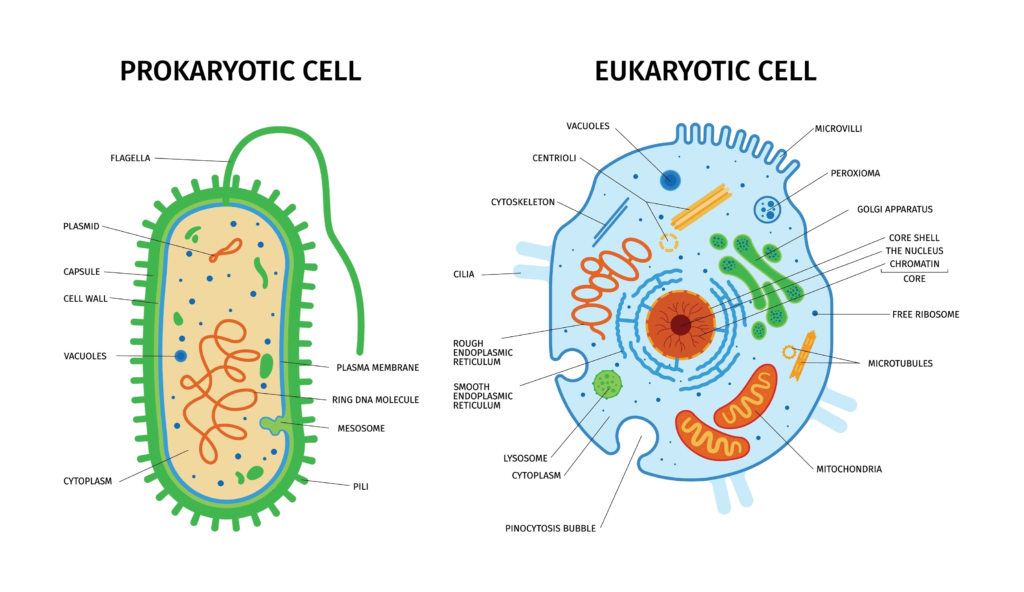
1. Prokaryotic Cells (The Minimalists):
These are simple and primitive cells: These are the ancient, simple cells found in bacteria. They don’t have a “control room” (nucleus); their DNA just floats around inside.
- No true nucleus
- DNA is free-floating
- No membrane-bound organelles
- Example: Bacteria
2. Eukaryotic Cells (The Specialists):
These are more advanced and complex: These are far more complex and make up plants, animals, and fungi. They use dedicated compartments called organelles to keep different chemical reactions from interfering with each other.
- True nucleus present
- Membrane-bound organelles exist
- Found in plants, animals, fungi
🧱 Basic Structure of a Cell
Every cell has three major components:
1. Cell Membrane
The cell membrane is a thin, flexible layer that surrounds the cell.
- It is selectively permeable
- Controls movement of substances in and out
👉 Example: Like a security gate controlling entry
2. Cytoplasm
The cytoplasm is a jelly-like substance inside the cell.
- Holds all organelles
- Site of many metabolic reactions
3. Nucleus
The nucleus is the control center:
- Contains DNA
- Regulates all cell activities
A Look Inside the “City”
If we think of a cell as a factory, the organelles are the specialized machinery keeping the lights on:
- The Nucleus 🧠: This is the administrative office. It stores the master blueprints (DNA) and coordinates everything from growth to reproduction.
- The Mitochondria ⚡: Often called the “powerhouse,” these act as the cell’s power plant, turning nutrients into a usable form of energy called ATP.
- The Cell Membrane 🛡️: Think of this as the security gate. It’s “selectively permeable,” meaning it’s picky about who—or what—gets to enter or leave.
⚙️ Cell Organelles and Their Functions
🟢 Nucleus
Stores genetic material and directs all cellular activities.
🔵 Mitochondria
Known as the powerhouse of the cell:
- Produces ATP (energy currency)
🟡 Ribosomes
Responsible for protein synthesis.
🟣 Endoplasmic Reticulum (ER)
- Rough ER: Protein synthesis
- Smooth ER: Lipid synthesis
🟠 Golgi Apparatus
- Modifies and packages proteins
⚫ Lysosomes
- Break down waste and damaged organelles
🌱 Plant Cell vs Animal Cell
🌱 Plant Cell vs 🐾 Animal Cell (Detailed Explanation)
🧬 What are Animal Cells and Plant Cells?
Both animal cells and plant cells are types of eukaryotic cells, meaning they have a true nucleus and membrane-bound organelles. However, they differ significantly in structure, function, and purpose because of how plants and animals survive in nature.
👉 In simple terms:
- Animal cells are designed for movement and flexibility
- Plant cells are designed for stability and food production
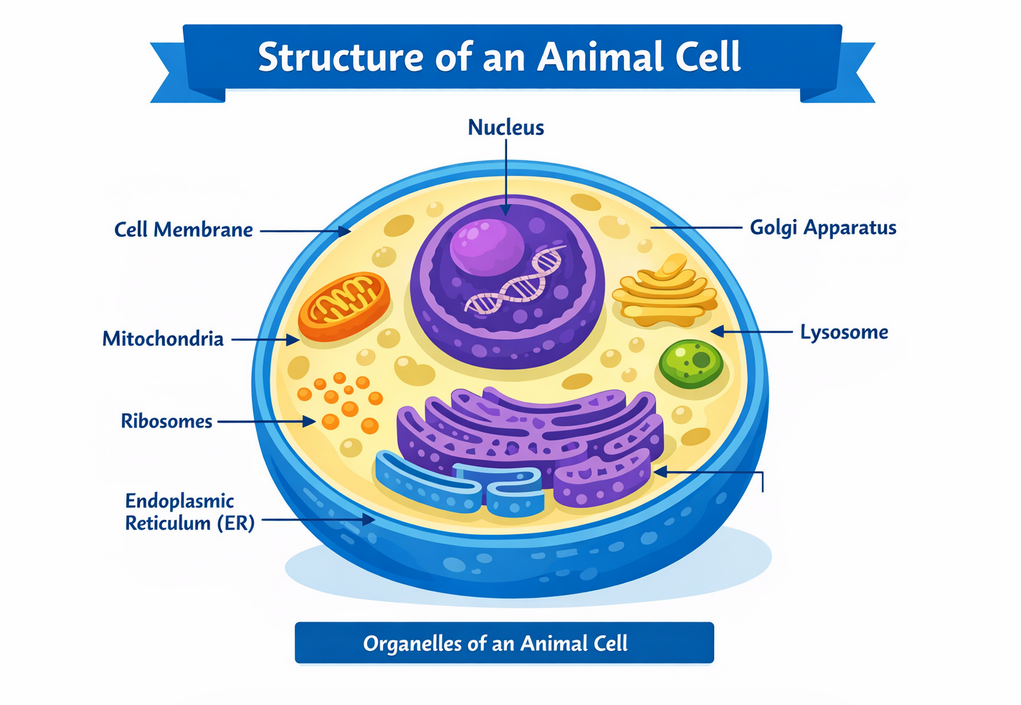
An animal cell is a type of eukaryotic cell found in animals, including humans. These cells are typically round or irregular in shape and do not have a rigid outer covering.These cells are specialized to perform different functions such as muscle contraction, nerve signaling, and digestion.
🔍 Key Features of Animal Cell
1. Cell Membrane
The outer boundary of the animal cell is the cell membrane, which is flexible and selectively permeable. It controls the movement of substances like nutrients, oxygen, and waste products in and out of the cell.
2. Nucleus
The nucleus acts as the brain of the cell. It contains DNA and controls all activities such as growth, metabolism, and reproduction.
3. Cytoplasm
The cytoplasm is a jelly-like fluid that fills the cell and holds all organelles. It is the site where many biochemical reactions take place.
4. Mitochondria
Known as the powerhouse of the cell, mitochondria generate energy (ATP) required for cellular functions.
5. Ribosomes
These are tiny structures responsible for protein synthesis, which is essential for building and repairing tissues.
6. Golgi Apparatus
The Golgi body modifies, packages, and transports proteins and lipids to different parts of the cell.
7. Endoplasmic Reticulum (ER)
- Rough ER → Protein synthesis
- Smooth ER → Lipid production
8. Lysosomes
These contain digestive enzymes that break down waste materials and damaged organelles.
🧠 Key Characteristics of Animal Cells
- No cell wall → flexible structure
- No chloroplast → cannot perform photosynthesis
- Smaller vacuoles
- Irregular shape
👉 Real-life analogy:
An animal cell is like a city without walls, where everything moves freely and is controlled by internal systems.
🔍 What is a Plant Cell?
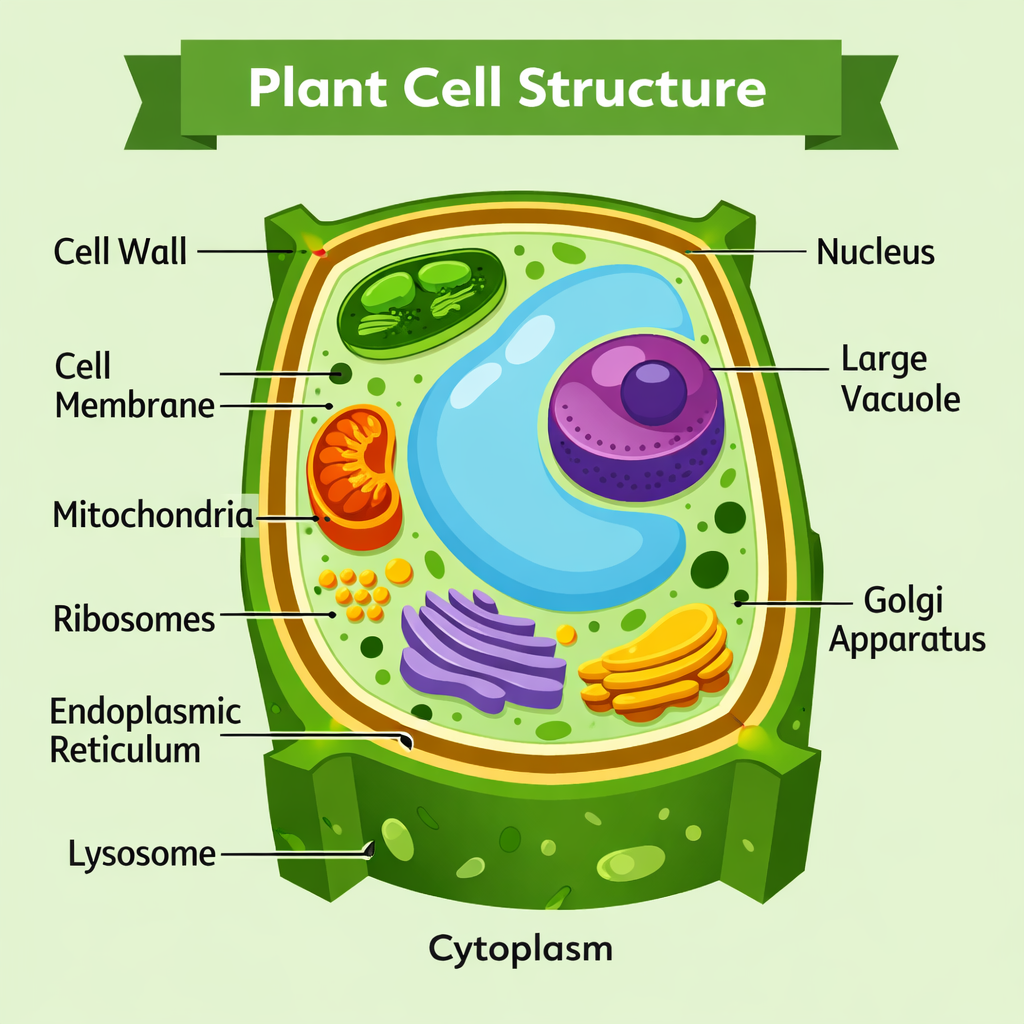
A plant cell is the basic structural and functional unit of plants. These cells are uniquely designed to produce food through photosynthesis and provide structural support to the plant. A plant cell is also a eukaryotic cell but has some unique features that allow plants to produce their own food and maintain structure.
🔍 Key Features of Plant Cell
1. Cell Wall
The cell wall is a rigid outer layer made of cellulose. It provides shape, support, and protection to the cell.
2. Cell Membrane
Located inside the cell wall, it controls the movement of substances.
3. Nucleus
Controls cell activities and contains genetic material.
4. Chloroplast
This is the most important feature of plant cells. It contains chlorophyll, which captures sunlight and helps in photosynthesis.
5. Large Central Vacuole
The vacuole stores water, nutrients, and waste. It also maintains turgor pressure, keeping the plant upright.
6. Mitochondria
Even plants need energy, so mitochondria are present for ATP production.
7. Cytoplasm
Acts as the medium for chemical reactions.
🌿 Key Characteristics of Plant Cells
- Cell wall present → rigid structure
- Chloroplast present → photosynthesis possible
- Large vacuole
- Fixed, rectangular shape
👉 Real-life analogy:
A plant cell is like a solar-powered factory with strong walls, producing its own food and maintaining structure.
| Feature | Animal Cell | Plant Cell |
|---|---|---|
| Cell Wall | ❌ Absent | ✅ Present |
| Chloroplast | ❌ Absent | ✅ Present |
| Shape | Irregular | Fixed/Rectangular |
| Vacuole | Small | Large |
| Energy Source | Food | Sunlight |
🧠 Easy Memory Trick
👉 “Plants Produce, Animals Consume”
- Plants → make food (photosynthesis)
- Animals → depend on food
🎯 Why This Difference Matters
Understanding the difference between plant and animal cells helps you:
- Answer exam questions easily
- Understand photosynthesis vs respiration
- Learn how life forms survive differently
- Build strong biology fundamentals
❓ FAQs
Q1: What is the powerhouse of the cell?
The mitochondria is known as the powerhouse of the cell because it produces energy in the form of ATP (adenosine triphosphate). This energy is essential for carrying out all cellular activities such as growth, repair, and movement. Without mitochondria, the cell would not have the energy required to function properly, making it one of the most important organelles.
Q2: Which organelle controls the cell?
The nucleus is the control center of the cell. It contains genetic material (DNA), which provides instructions for all cellular activities, including growth, metabolism, and reproduction. The nucleus regulates gene expression and ensures that the cell functions in an organized and controlled manner, making it essential for survival and proper functioning.
Q3: What is the function of the cell membrane?
The cell membrane acts as a protective boundary that surrounds the cell and controls the movement of substances in and out. It is selectively permeable, meaning it allows only certain molecules like nutrients and oxygen to enter while keeping harmful substances out. This regulation helps maintain a stable internal environment, which is crucial for the cell’s survival.
Q4: What is the role of ribosomes in a cell?
Ribosomes are responsible for protein synthesis, which is vital for cell growth and repair. They read genetic instructions from RNA and assemble amino acids to form proteins. These proteins are used in various functions, including building cell structures, producing enzymes, and supporting metabolic activities. Without ribosomes, a cell cannot produce the proteins it needs to survive.
Q5: What is the difference between plant and animal cells?
Plant and animal cells differ in structure and function. Plant cells have a rigid cell wall, chloroplasts for photosynthesis, and a fixed shape, while animal cells lack these features and have a more flexible structure. These differences allow plant cells to produce their own food, whereas animal cells depend on external sources for nutrition.
Q6: Why are lysosomes called the “suicide bags” of the cell?
Lysosomes are called “suicide bags” because they contain powerful digestive enzymes that can break down waste materials, damaged organelles, and even the entire cell if necessary. When a cell is severely damaged or infected, lysosomes can release these enzymes to destroy the cell, preventing harm to surrounding cells and maintaining overall health.
Q7: What is cytoplasm and why is it important?
The cytoplasm is a jelly-like substance that fills the interior of the cell and holds all organelles in place. It is the site of many important chemical reactions that keep the cell alive. The cytoplasm also helps in the movement of materials within the cell and provides a medium for metabolic processes, making it essential for cellular function.
Q8: How do cells communicate with each other?
Cells communicate through chemical signals such as hormones and neurotransmitters. These signals bind to receptors on the cell membrane, triggering specific responses inside the cell. This communication allows cells to coordinate activities, respond to environmental changes, and maintain proper functioning of tissues and organs in multicellular organisms.
Q9: Why don’t animal cells have chloroplasts?
Animal cells do not perform photosynthesis, so they do not need chloroplasts. They obtain energy by consuming food instead of producing it.
Q10: Why is the vacuole larger in plant cells?
The large vacuole helps maintain pressure inside the cell, which keeps plants upright and rigid. It also stores water and nutrients.
For more blogs in the biology domain, read here